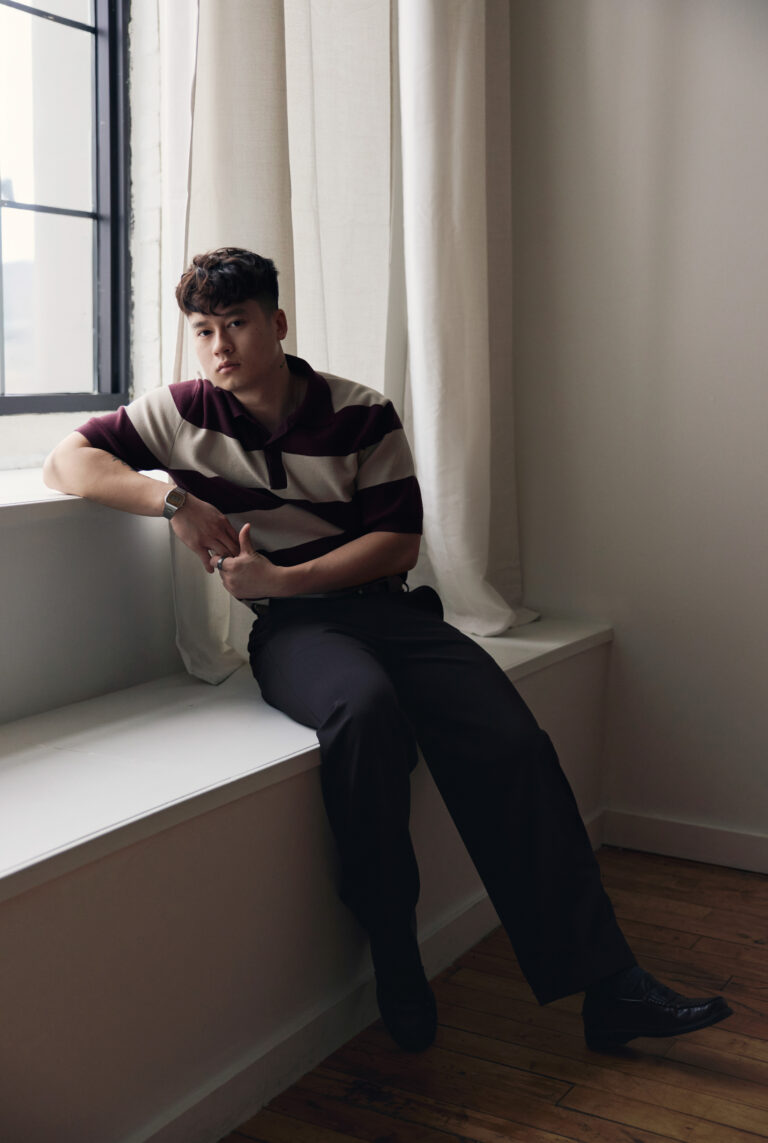
 When Khan was seven years old, his family immigrated to the United States, beginning a journey that would eventually lead him to a career in design. His first professional path led him into flight training. He began training as a helicopter pilot before transitioning to fixed-wing aviation, and earning his pilot’s license.
Aviation taught him valuable lessons about structure, systems, and discipline but over time, he realized that something essential was missing. While aviation challenged him technically, it left little room for a creative side he had set aside. That realization eventually prompted him to step away from the field and reconnect with something he hadn’t explored since middle school: art.
He began sculpting, painting, and woodworking again, reconnecting with the process of working with materials and building things by hand. What started as a simple return to art soon grew into a deeper curiosity about making and design. Working with physical materials eventually led him into digital fabrication. He began experimenting with CNC machines and CAD software, designing and building objects and wall installations. As he continued exploring, the scale of his ideas expanded. Designing objects led to designing walls, and walls led to imagining entire rooms. Gradually he realized that what fascinated him most was not just the objects themselves, but the spaces people inhabit.
That realization ultimately led him to pursue interior design and enroll at the Heritage School of Interior Design Seattle. For him, design represents a powerful intersection of creativity, technical thinking, and human experience. Since starting at Heritage, that curiosity has only deepened. He has gained experience in space planning, design development, and digital modeling using industry-standard programs such as AutoCAD, Revit, SketchUp, and Enscape. More importantly, the program has helped him understand how ideas move from concept to something that can actually be built.
About his time at HSID Seattle:
“My experience at Heritage School of Interior Design has been both practical and inspiring. The program is structured in a way that encourages hands-on learning while also teaching the technical and professional aspects of design. Heritage also helped me build confidence in my ability to keep learning. The design field is constantly evolving, and the program gave me the foundation to continue growing after graduation.”
When asked about accomplishments, he doesn’t point to a single milestone or project. Khan sees achievement in the process of continual improvement—learning a new skill, solving a difficult design problem, or pushing beyond a previous limitation. Each challenge becomes an opportunity to grow.
Today, design has become more than a career path; it is a lifelong curiosity. He continues experimenting with new materials, tools, and ideas while learning from people across many creative disciplines. The deeper he explores the field, the more he appreciates how closely design connects art, technology, and human experience.
His journey, from aviation to art to interior design, reflects the kind of discovery that can happen when curiosity is given room to grow. At the Heritage School of Interior Design, that curiosity has found both structure and opportunity, transforming creative exploration into a professional path.

