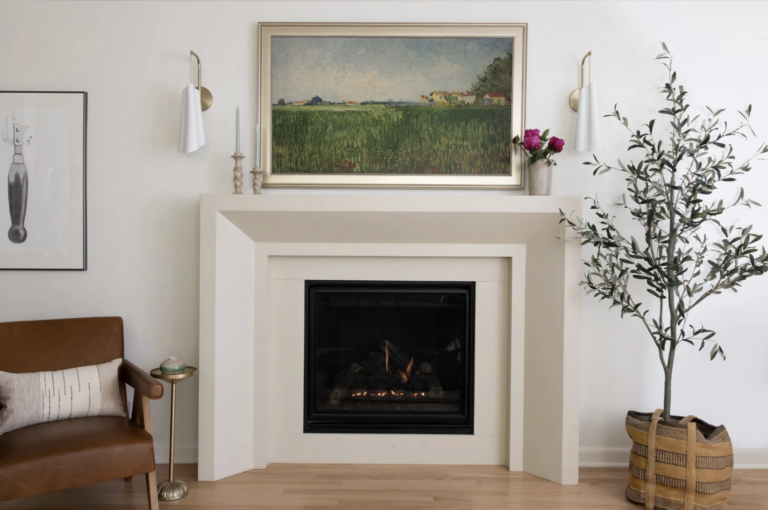
Kelly Smethills and Ann Marie Winkler didn’t take a traditional path into interior design, but their story is exactly what makes their work so compelling. After careers in tech consulting and travel nursing, the sisters found their way to Heritage School of Interior Design in Denver, where they built the foundation for what is now their growing firm, Huron Interiors. Recently featured in Heritage Design Magazine, they share how their upbringing, challenges, and leap of faith shaped their journey.
 Tell us about your background. Where are you from? What was your career path prior to HSID?
We grew up in a family of five kids, with Kelly as the second and Ann Marie as the fourth. We moved a lot—never staying in one place for more than two or three years due to our dad’s job. Every time we moved, our mom would design the new house so it felt like home quickly. The other constant was our family cabin on Lake Huron in Michigan’s Upper Peninsula, which inspired our business name.
Before design, Kelly studied at the University of Michigan and worked in telecommunications and tech consulting. She moved to Denver right after college and has been here for 12 years. Ann Marie also attended the University of Michigan and worked as a travel nurse across the country before settling in Denver three years ago.
Why did you decide to pursue interior design as your career?
Because of our dad’s job, we moved constantly, even internationally, living in places like Argentina, Mexico, Pennsylvania, Nebraska, and Michigan. Our mom worked hard to make each house feel like home, experimenting with color, texture, and pattern. We remember her sponge-painting staircases, gold-leafing paper bags, and snapping chalk lines for perfect stripes.
In our previous roles, we both realized we wanted something more creative that brought us back to our roots. While Ann Marie was on a travel nursing contract in California, Kelly called and said, “Hear me out…” We talked about dream jobs—what we would do if money and time weren’t an issue—and realized we were aligned. Then Kelly said, “I’ve already found the perfect school.” Without hesitation, Ann Marie was in. That’s how we discovered HSID.
What challenges did you have to overcome to get where you are today?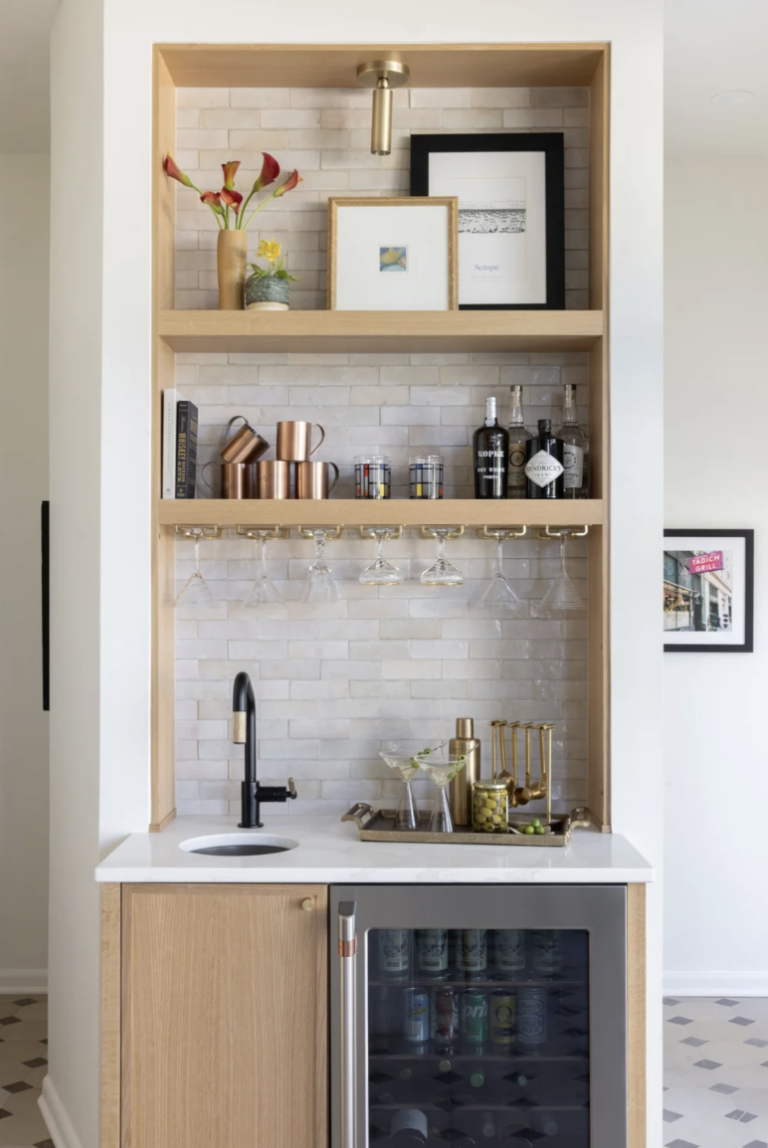
Moving often as kids had its challenges, but it shaped us in the best ways. It taught us how to adapt, welcome new experiences, and stay resilient. We also lost our dad at a young age. That was one of life’s hardest challenges, but it brought our family closer and reminded us that life is short. It’s important to chase what makes you happy.
Switching careers was scary. Leaving stable jobs and paychecks to go back to school and start a business was intimidating. We’ve had to learn how to balance design work with running a company, build industry relationships, and establish our name in a competitive field. These experiences have made us stronger designers and partners.
Tell us about your experience at HSID and how it prepared you for a design career.
Coming from prior careers, the idea of returning to school for four years felt out of reach. If HSID hadn’t existed, we might not have pursued this dream. The program gave us a strong foundation and the confidence to step into the design industry.
Our instructors were invaluable, sharing real-world experience and thoughtful feedback. We also had opportunities to engage with the local design community and gain hands-on project experience. Through these connections, we found part-time roles as design assistants. The combination of creativity and practical skills made the program a perfect springboard for our careers.
What are you currently working on?
We’re both working part-time as design assistants for firms in Denver while running Huron Interiors, now in its second year. We started with smaller projects and have grown into construction work, including kitchens, living rooms, and full home remodels.
Right now, we’re in the furnishing and styling phase of two whole-home remodels, in construction on a Hilltop flip, in the purchasing phase for a living room and kitchen remodel, and kicking off a primary and kids’ bath project soon. Every project is a step toward our long-term vision.


Tell us about your business, Huron Interiors.
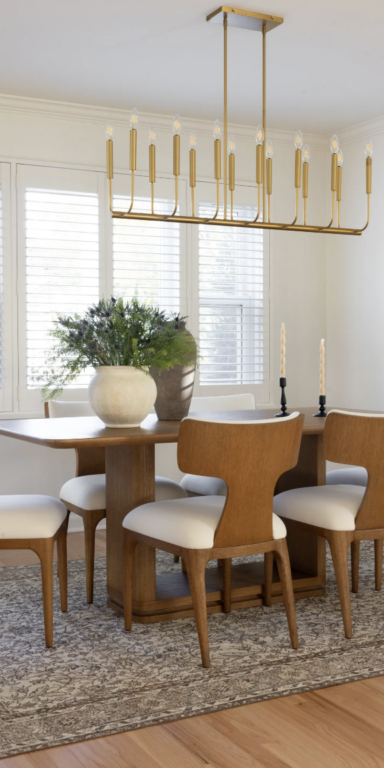
We started Huron Interiors, our Denver-based studio, two years ago. The name comes from our family cabin on Lake Huron—our “home” base. We’re a full-service residential design firm and have taken on one commercial project so far, with plans to do more.
Our process is hands-on and collaborative. We work closely with clients and aim to make the experience as smooth as possible, knowing construction isn’t always easy. Every project is different, and we love both the creative and problem-solving sides. For us, it’s not just about beautiful spaces—it’s about creating environments where people feel like themselves.
What is the best advice you’ve ever received?
Three things stand out: don’t be afraid to make mistakes, focus on what you can control, and avoid the comparison game. As Brené Brown says, “comparison is the thief of joy.”
These apply to every part of life, especially design. Things won’t always go perfectly, but focusing on what we can control has helped us build a strong, client-focused process. And while social media can inspire, it’s important not to let it diminish your own progress.
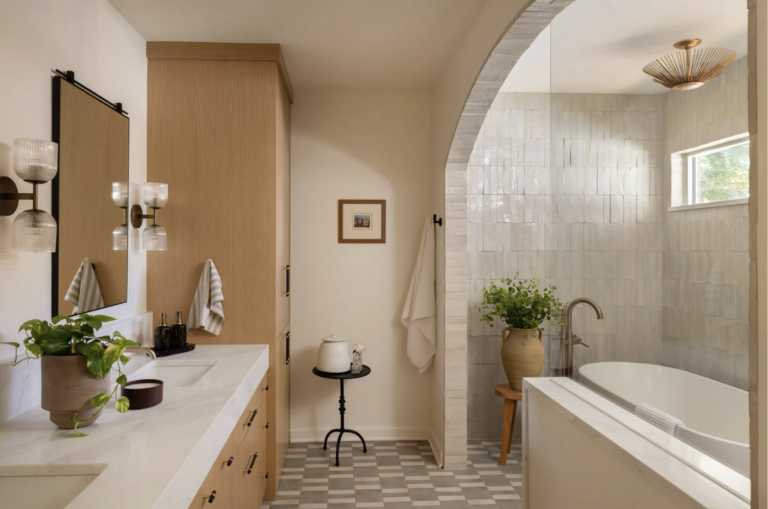
Are there any accomplishments or proud moments you’d like to share?
Starting Huron Interiors has been a huge milestone. We’re planning to go full-time in 2026, and every project feels like an accomplishment.
Client referrals have been especially meaningful. It means people trust and value our work. But the best moments are when a client walks into their finished space and says, “I love it.” That’s why we do this.
What are your future career goals?
We want to continue growing Huron Interiors and eventually expand into product design—possibly fabric, wallpaper, or lighting. Seeing something we designed in people’s homes would be incredible.
Anything else you’d like to share?
We’re incredibly grateful for our time at Heritage School of Interior Design. Without the fundamentals and software skills we learned, breaking into this industry would have been extremely difficult. The faculty and classmates were a huge support system.